A framework makes all the difference! How to help your people create more meaningful development plans
Jenny* is in her mid 50s and works in tech. Recently she finished one of our Careers that Work programmes. As she was sharing her key learnings from the programme with others, she started to cry. Through her tears she shared her realisation that in all her time working, she had never felt in control of her career. While she was likely grieving for her less confident, less empowered self, she also talked of her sense of a new beginning. With a framework, tools and a plan for her next steps, she was excited for the next 10 - 15 years and intended to make the most of them. It was such a powerful moment, we were all in tears.
Jenny’s story perfectly illustrates one of the big factors that hinders meaningful exploration of ‘what next in my career’. The question feels too big, mysterious and intimidating to approach. It feels like standing at the edge of a deep dark pool without a ladder or floatation device! It’s just too hard to jump in.

Without a framework to guide thinking, beyond the development plan template itself, at worst development plans are a ‘tick box exercise’ and at best they tend to be front loaded, with most of the focus and actions about the job at hand. It gets murkier the further down the road we ask people to look.
There are a number of well established frameworks or models to guide development planning. Richard N. Bolles' 'What Color Is Your Parachute?' is a seminal work in the field of career development. The Flower Petal model is a central tool in his book, which itself has evolved over the years. Ikigai is another. Originating from Okinawa, Japan - one of the world's "Blue Zones" known for longevity and happiness - the Ikigai model centers around finding one's true purpose and passion in life. It is a great tool for guiding exploration around careers that could provide fulfillment and meaning.
At amp’d we’ve established our own framework based on design thinking philosophy.
Most frameworks start with the need for the individual to have self awareness of what is important to them, what they are good at, what they enjoy doing. Most people have, surprisingly, never stopped to take comprehensive stock of these things unless they have been lucky enough to go on a fulsome leadership development programme.
This self knowledge is the essential foundation on which great career and development planning can be built. It takes time and reflection.
Next is option exploration, decision making, planning and action. Simple right?!
One framework that helps these latter stages, particularly when there are more than one career or development option to evaluate, is the one we like to use. It’s a gem.
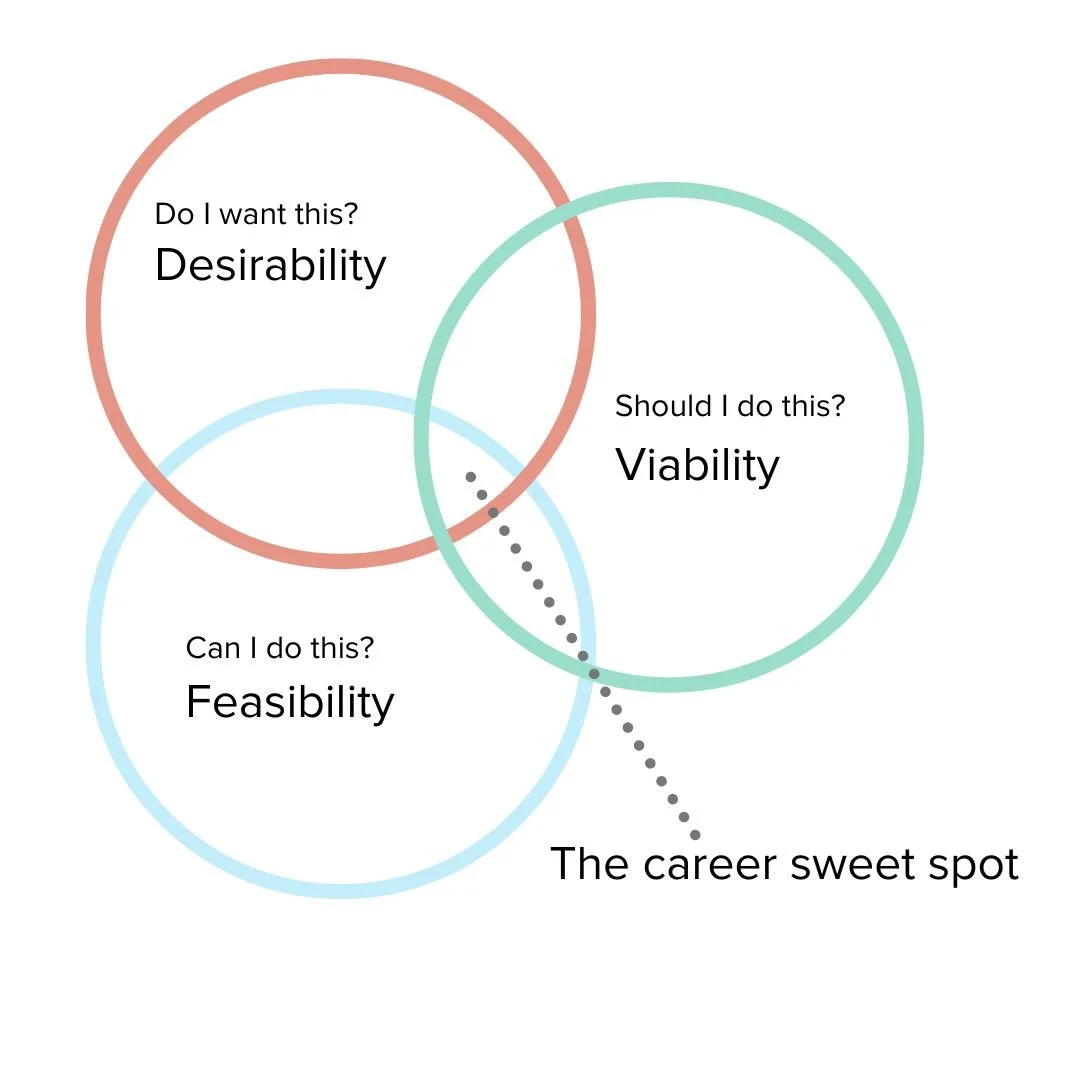
IDEO's Desirability, Viability, Feasibility Framework (DVF)
In the early 2000’s, IDEO, a renowned design and innovation consultancy, developed a powerful framework for evaluating options. This model, originally developed for product design, can be effectively adapted to help individuals evaluate their career path options.
Desirability
In the context of career development, Desirability focuses on personal passions and interests. It encourages individuals to reflect on whether the option would truly excite and motivate them in their work. Questions for people to consider here are ‘What personal meaning would you get from this?’; ‘how might it align to your values?’ and ‘what interests you about this?’ By answering these sorts of questions, it is possible for the person to assess if the option is likely to be aligned with their intrinsic motivations.
Feasibility
Feasibility delves into whether the option(s) aligns with the individual's current skills and strengths. As a starting point, this step requires the individual to have a good handle on their existing capabilities. Questions like, ‘What skills and talents do you possess?’ and ‘How can these skills be applied to this opportunity?’, ‘What capabilities would you need to develop for this opportunity?’ ‘How might those capabilities be gained?’ are crucial in this step. If new skills are required, this is an opportunity to explore whether the person would have a natural aptitude for those skills.
Viability
Viability explores whether or not the option(s) could be financially sustainable over the short and longer term. How big (or growing) is the market for this role or job type? This is a hugely important component that is sometimes missed out in career planning. It's important to consider factors like industry trends, labour market conditions, and the potential for advancement. Encourage employees to ask themselves, ‘Is the career option viable given the current job market?’
Individuals also need to consider whether or not the options they are considering will fund the lifestyle they want or need. By being clear on what they realistically need to reach their financial goals is an important consideration. By encouraging individuals to evaluate viability, leaders can make sure career and development plans are grounded in reality.
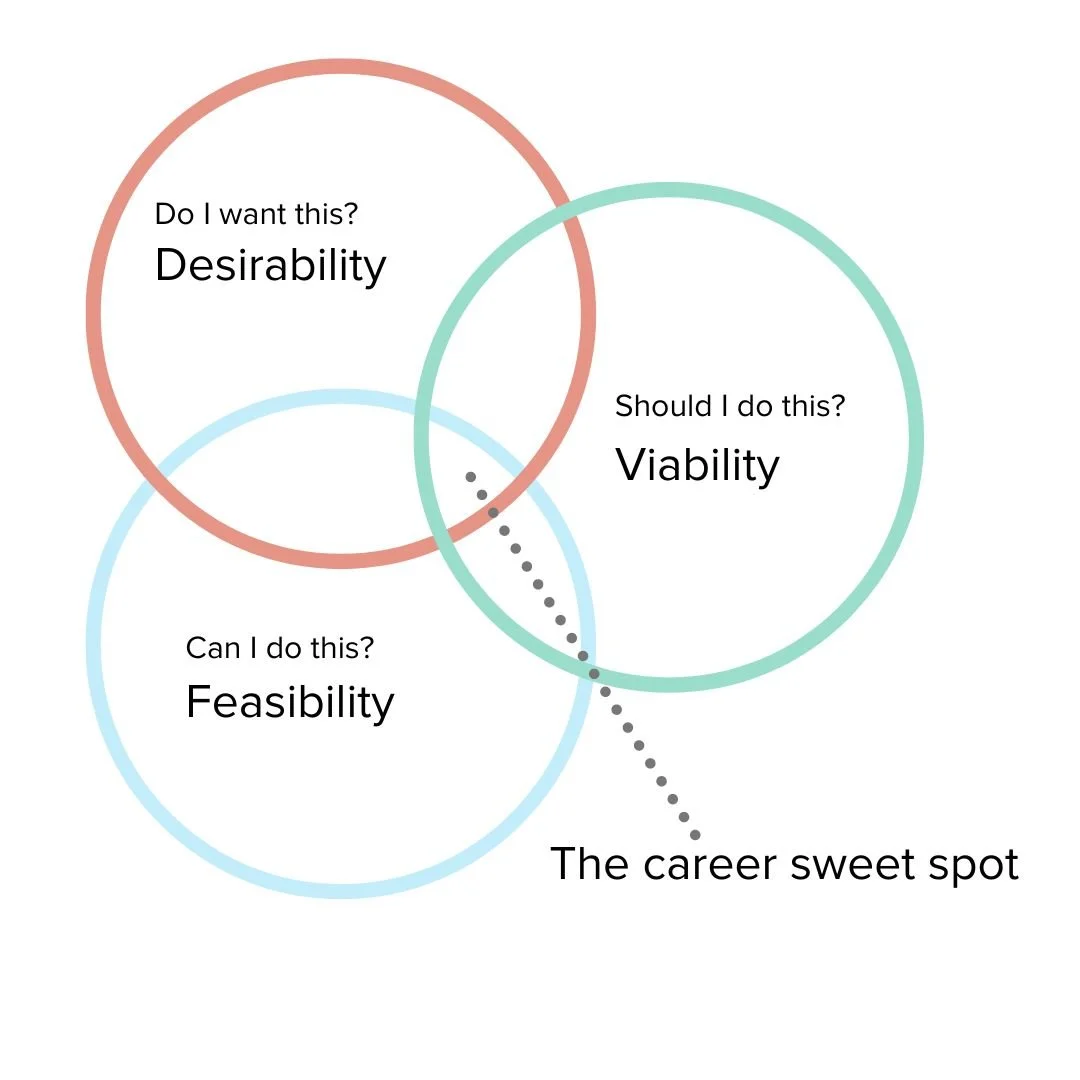
Typically, using this framework to ask questions creates a need for individuals to do further due diligence. The great thing about this is it is a risk mitigant against leaping into opportunities that don’t end up being right for the individual or the organisation.
By utilising the DVF Framework, people leaders and HR professionals can help create career development plans that not only resonate with employees' desires but may also be aligned with organisational objectives and feasible to achieve.
*Name changed to protect privacy
Related stories