

What is Design Thinking?
Design thinking is a way of helping solve problems in all spheres of work and life. It's called Design Thinking because it breaks down and codifies the practices a designer would use to create something new.
Design thinking is particularly effective in solving problems that are not well defined or are unknown. Sounds like most people’s career paths, right? That's why we’ve chosen it as the framework for our programmes.
A number of organisations around the world, but particularly the US tech sector, have been using design thinking for a while. Organisations like Apple, Google and Facebook have been using design thinking so long, they have their own versions of it.
IBM, a multi-national tech company who use design thinking a lot, have measured its effectiveness on their business. They say they are now 2 x faster at getting their products or services to market and have a 301% return on investment.
It is taught at some of the top universities around the world - Harvard, Stanford, MIT and Darden in the USA, Oxford and Imperial College London in the UK to name a few.
There are a few different design thinking approaches. We use the model developed at Hasso-Plattner Institute of Design at Stanford University, known as d.school, for our programmes. They are considered to be leaders in the teaching and application of design thinking.
If you’re interested to find out more about Design Thinking we can recommend IdeoU.
There are two main ideas at the core of Design thinking.
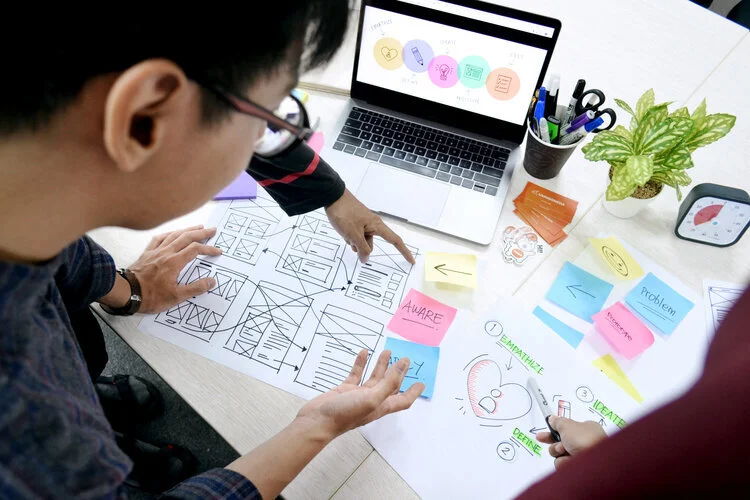
Start with what humans need.
At the core of design thinking is deeply understanding what customers or users need. This is called empathy. When you are doing one of our programmes, the customer is you! Only when you deeply understand needs can you clearly define the problem (or problems) you are trying to solve. So often in life and work, we expend a lot of energy trying to solve the wrong problems! That is why we dedicate such a big chunk of our programmes to the empathy phase. We want to give you the greatest opportunity to understand yourself better and define the specific things that are important for a job you could love.
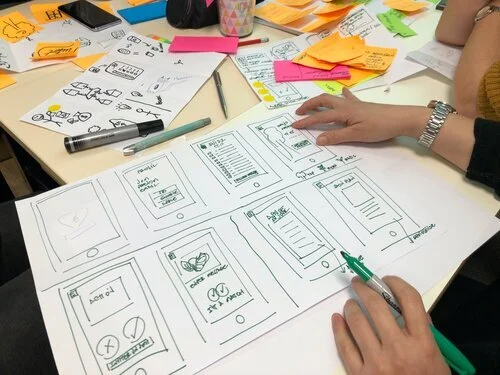
Fail fast and fail cheap.
Then after brainstorming like crazy (this is called ideation) you quickly develop scrappy prototypes of potential solutions and test them straight away.
Testing rough prototypes early means you get feedback from customers or users quickly and if it's not right then you haven't wasted much time or money working on the wrong solution.
If you’re on our programme, your prototypes will be the early versions of your career plan.