Supporting the development of your people - Who is responsible for what?
As any good project manager knows, it’s vital to be crystal clear on who is responsible for what. Development planning is no different. This might sound dead obvious, but in our experience it is not unusual for there to be confusion in this space, leading to unmet expectations, disappointment, and disengagement.
So for the purposes of absolute clarity this article attempts to describe how development comes together successfully at work, because it doesn’t happen in a vacuum or by accident!
There are three important players (or roles) in any organisation with specific responsibilities, that come together to generate development energy, action and outcomes. Important caveat - No organisation is perfect and there are always opportunities for improvement in any system!
The employee:
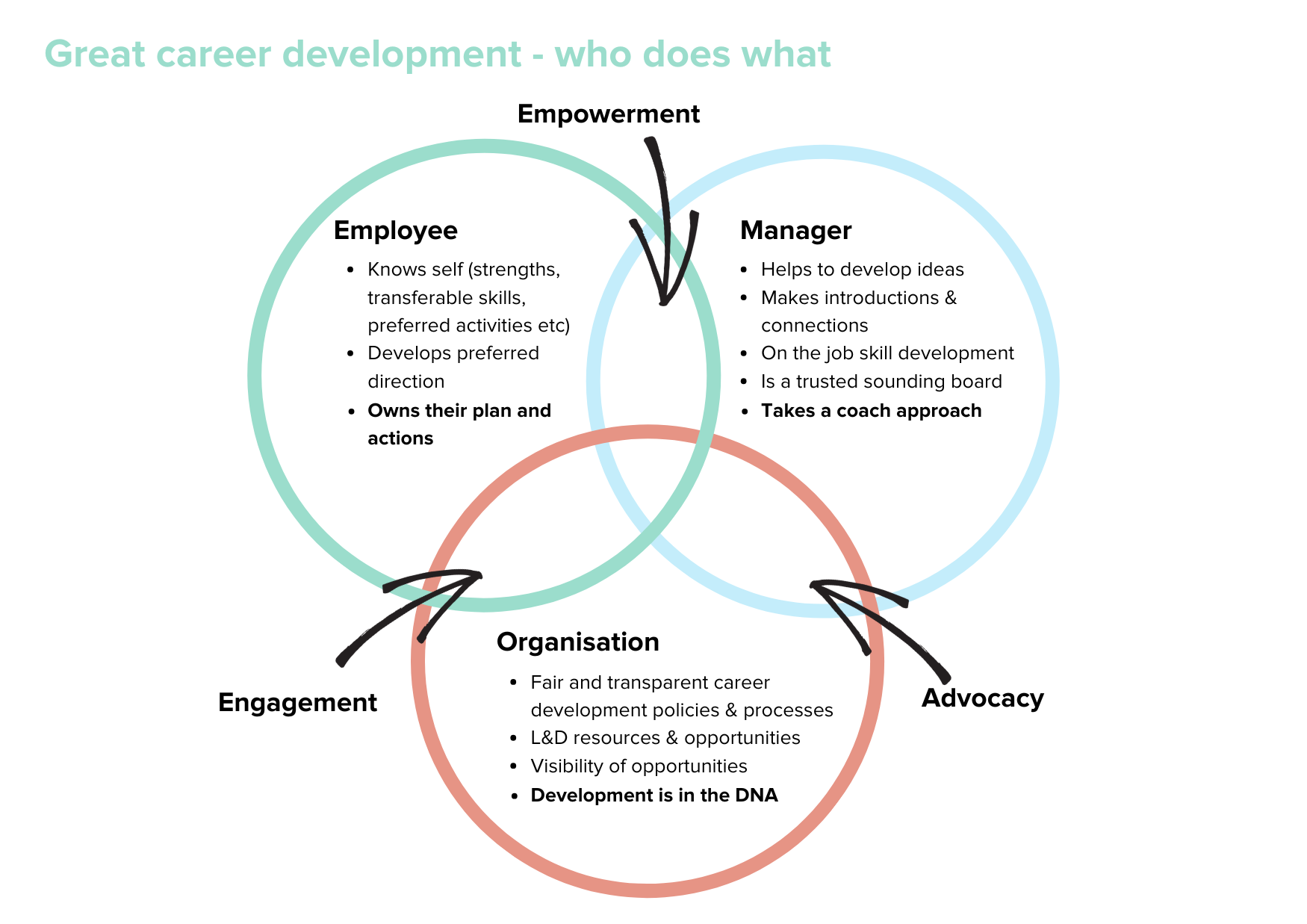
First, the individual’s mission is to know themself - their strengths, their transferable skills (that they love using), their values etc, while at the same time creating space for outside perspectives to stretch their thinking, and remove blind spots.
Self-knowledge is an excellent foundation from which to start drafting out development ideas and plans. Plans may be rough and full of gaps, but they create a great starting point for discussions with a manager or mentor, to further refine ideas.
Ultimately, it's their life - so it is up to them to take ownership of their plan and take the actions needed to move forward.
The manager:
Individuals often look to their manager for the answers and managers may feel some responsibility to provide them. It isn’t actually their role to provide the answers. Their mission, in a career & development sense, is to be a trusted sounding board and take a coach approach to help shape their team member’s ideas and further refine them. As a base line, this requires a mutual understanding of current performance - strengths and weaknesses in the current role. Managers may build on this shared understanding by offering fresh perspectives to stretch and challenge their team member’s thinking. They may be able to make introductions and connections to others who might be able to help.
One of the most important roles of a leader is to help their people be the best they can be. That involves investing a bit of time to help their people identify the direction that is right for them and in many cases helping build the individual’s confidence to pursue that direction. In doing so, all evidence points to leaders being rewarded with higher engagement and productivity.
The Organisation:
This ‘role’ represents all the development support provided by the organisation, typically in the form of people related systems, processes, practices and resources. These are unique to each organisation and will have been developed to reflect the organisation’s values, desired culture, organisational strategy, available resources, and learning programmes aimed at building the skills and capabilities needed for now and the future.
Employees need to know where and how to access the information, resources and support they need, and that there is consistency and transparency.
The goal here is to make development part of the DNA of the organisation.

The overlaps between these roles is where the magic happens
When managers and individuals are clear on their roles and there is commitment from both parties to:
prioritise time for development conversations
be empathetic and judgement free
ensure agreed actions get done
build openness & trust
It is incredibly empowering for individuals.
When managers understand the direction their people want to head in, it makes it so much easier to advocate on behalf of them. There’s a much higher likelihood of:
fair & accurate representation of team member in talent forums and performance discussions
championing of the team member to others, facilitating introductions in support of the employee’s growth aspirations
openness to making available non-traditional development opportunities
having a mature attitude to career development within and outside of the organisation
And finally engagement is enhanced when employees believe their time and effort engaging with people processes and practices is time well spent, (e.g. learning is relevant to role or development goals, applications for internal opportunities are well managed etc.)
This venn diagram presents a simple model. Great career development doesn’t occur in a vacuum - and everyone needs to do their bit to get the system humming, and achieve great development outcomes.
Related stories